Researchers identify a therapeutic vulnerability in aggressive childhood cancers
Researchers at the Josep Carreras Leukaemia Research Institute have identified a previously unknown weakness in malignant rhabdoid tumours, rare and highly aggressive childhood cancers for which treatment options remain extremely limited. The study identifies a previously unrecognised vulnerability in tumours lacking SMARCB1, opening new possibilities for the treatment of these highly aggressive cancers.
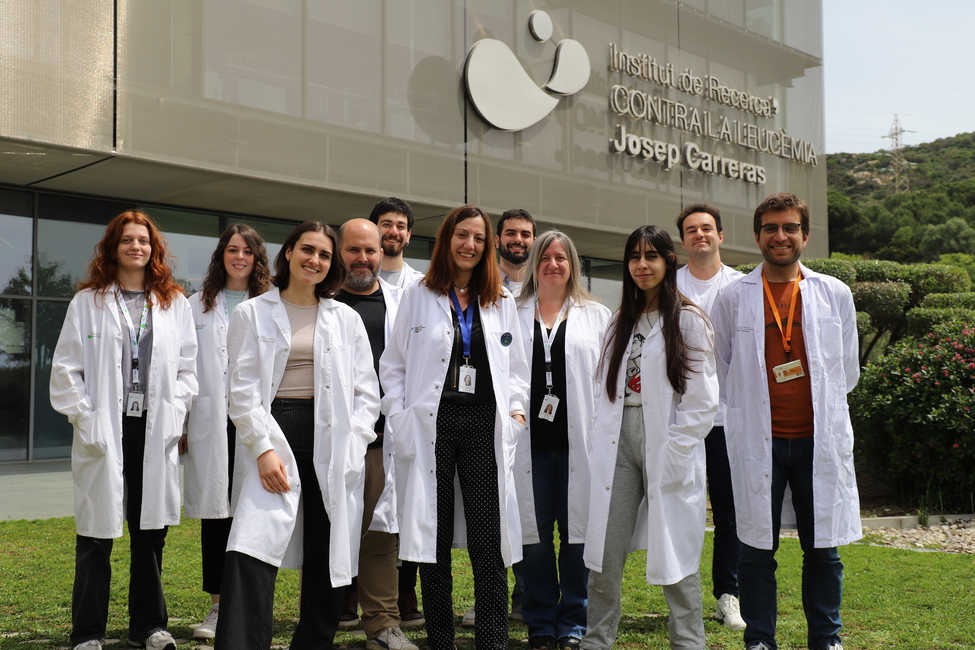
Researchers at the Josep Carreras Leukaemia Research Institute have identified a previously unrecognised vulnerability in malignant rhabdoid tumours, rare and highly aggressive childhood cancers with very limited treatment options. The study shows that tumours lacking the gene SMARCB1 become unusually dependent on both epigenetic regulators and autophagy, a cellular recycling process that helps cells survive under stressful conditions.
The work, led by Dr Montse Sanchez-Cespedes and Dr Octavio Romero, has been published in Cancer Research and provides new insight into the biological mechanisms that sustain these aggressive tumours.
Malignant rhabdoid tumours (MRTs) are rare paediatric cancers that can arise in several parts of the body, including the kidneys, liver and soft tissues. They are characterised by the loss of SMARCB1, a gene that plays a key role in regulating how DNA is organised within cells and how genes are switched on and off. Despite intensive treatment, outcomes remain poor for many patients, highlighting the need for new therapeutic approaches.
In the new study, the researchers found that the loss of SMARCB1 disrupts normal epigenetic regulation and creates a cellular state in which tumour cells become highly dependent on autophagy and other stress-response mechanisms for survival.
"We found that when this gene is missing, tumour cells become unusually dependent on both epigenetic regulators and a cellular recycling process known as autophagy. By blocking a key epigenetic enzyme involved in this process, we triggered severe stress within cancer cells and promoted extensive tumour cell death in laboratory models and in patient-derived tumours."
Octavio Romero, IJC research associate.
The team focused on KDM6A and KDM6B, two enzymes involved in controlling epigenetic marks that regulate gene activity. Using GSK-J4, a compound that inhibits these enzymes, they found that cancer cells lacking SMARCB1 were particularly sensitive to treatment. The inhibition disrupted the cells' ability to cope with stress and ultimately led to cell death.
Importantly, the findings extended beyond laboratory-grown cells. In patient-derived preclinical models, treatment with GSK-J4 significantly slowed tumour growth and caused extensive damage to tumour tissue, supporting the relevance of the vulnerability identified by the researchers.
The study also showed that a similar dependency exists in tumours lacking SMARCA4, another key component of the same chromatin-remodelling machinery. This suggests that the biological mechanism uncovered by the researchers may be relevant to a broader group of cancers driven by defects in these epigenetic regulators.
More broadly, the findings illustrate how studying the fundamental mechanisms that drive rare cancers can generate knowledge relevant across different tumour types. The biological processes identified in this work, including epigenetic dysregulation, cellular stress responses and autophagy, are also implicated in several haematological malignancies and other aggressive cancers.
“The biological mechanisms uncovered in this study, epigenetic dysregulation, stress adaptation, and therapeutic vulnerabilities associated with chromatin-remodeling defects, are relevant to a broad range of malignancies, including haematological cancers. By identifying new opportunities for targeted therapies, this work contributes to the Josep Carreras Institute’s mission of translating discoveries in cancer biology into better treatments and improved outcomes for patients and their families.”
Montse Sanchez-Cespedes, IJC Group Leader.
Although the findings remain at a preclinical stage, the study identifies a previously unrecognised vulnerability in SMARCB1-deficient tumours and provides a strong foundation for future research into therapeutic strategies targeting these pathways.
About the study
The study, entitled “SMARCB1 Deficiency in Tumors Confers a Vulnerability to H3K27 Demethylase Inhibitors via Autophagy Disruption”, has been published in Cancer Research.
The research was led by Dr Montse Sanchez-Cespedes and Dr Octavio Romero from the Cancer Genetics Group] at the Josep Carreras Leukaemia Research Institute, with the participation of researchers from Vall d'Hebron University Hospital, Vall d'Hebron Research Institute (VHIR), the Bellvitge Biomedical Research Institute (IDIBELL), the University of Valencia and other collaborating institutions.
The work was supported by funding from the Spanish Ministry of Science, Innovation and Universities (MCIU), the Instituto de Salud Carlos III (ISCIII), the Government of Catalonia through AGAUR, and the Spanish Association Against Cancer (AECC), among other funding bodies.